The Deep State and childhood disease
Yesterday in the Ezra Klein Show the guest was some evidently right-wing guy I had never heard of. Like everybody else with whom Ezra Klein talks in his show, this guy was no moron, and it was actually really interesting to listen to somebody so evidently smart presenting a view of Trump and Trumpism so different from mine. The guy was very careful to make clear that he was not really explaining what he himself thinks but rather what people, in his opinion, find in Trump. However, since he was doing such a good job interpreting what the Trump voters wanted, it was hard for me not to come out of it with the idea that, while he might not like some/many of the things Trump is doing, what he would have wanted is a better version of Trump. Still, it was really interesting.
His basic argument was about democracy and the deep state. I found it already curious that he spoke about the “deep state”, an expression that in my mind touches conspiracy theory territory, but being so evidently smart he managed to use it in a way that gave it meaning. At a first approximation, he meant by it the “administrative state”, but, although he didn’t give definitions or anything, one ended up having the impression that “deep state” might actually be a better name for what he was trying to describe.
What he was basically saying is that Trump is an answer to the yearning that people have for real democracy. If you want, the cartoon picture of democracy is that when a decision has to be taken, it is the people who take it. Now, when taken literally, this can only be workable in the smallest of social groups. I mean, the Swiss might have referendums all the time, but it is not like Urs and Heidi are always leaving their watchmaking and cattle herding to go vote on laws regulating what are the conditions that foreign companies have to satisfy to be allowed to take over a Swiss company. So, what happens is that one regularly chooses representatives that decide in one’s name. In fact, deciding in one’s name is the right way to put it because what one is doing is to delegate the decision-making process: one is sending to parliament people whom one trusts share one’s opinions and who generally will vote along the lines of what one would have voted, but one is not dictating to them what to vote. It is evident that this is already a compromise with the cartoon idea of democracy.
And that is a pretty heavy compromise. I mean, in real life it is unavoidable that being a politician is a job like being a baker, and this means that, like for bakeries, there is limited choice and one does not really know what really makes this or that politician tick. Like bakeries, there are politicians one likes or trusts. Then if at some point this politician sells you noticeably stale pains au chocolat, you change to whom you give your vote. But while the popularity of politicians changes over time, like that of bakeries, in the aggregate they tend to stay open for business independently of what they voted last week. That means that as a citizen one has a limited amount of choice taken from a pretty immutable pool of choices. This is far away from the cartoon picture of democracy.
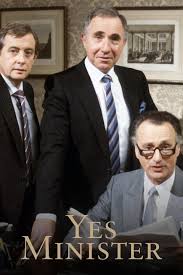
But there is more. Indeed, politicians are supposed to decide on trade, education, health, digital taxes, farming, forever chemicals, electric grids, sports funding, and so on, and it is clear that they can’t be experts on most of these matters. This means that they are dependent on experts nobody elected. And well, politicians find expertise in the most varied places, but they largely rely on experts working for the state—people who were there before and will be there after this particular politician moves on from working on European affairs to digital transition. And well, anybody who has ever watched Yes, Minister realizes the power that experts and civil servants wield. But it is not only that current experts influence what politicians do, but also that prior politicians (and experts) have passed interlocking rules and regulations and signed treaties that tie down whomever is supposed to reflect the will of the people at the time. The voters of a French politician might want this or that, and the French politician might want to do it, but he or she has to deal with the state of finances, with environmental and labor regulations, with whatever the conseil constitutionnel thinks is according to law, with European regulations, and so on. As I said, all of that is really far from the cartoon picture of democracy.
It seems to me that what this guest at the Ezra Klein show was calling “the deep state” is the superposition of filters between what voters might want and what eventually happens. His thesis—at least in part—is that what people saw in Trump was somebody who would shatter many of those filters. For example, he claimed—using different words—something along the lines that efficiency was just a fig leaf, and that the point was just to blow away some of the structure of the state.
Now, this is at best a generous interpretation of why people voted for Trump. It ignores propaganda, the footballization of politics, racism, xenophobia, and a bunch of other things. But this guy might well have a point. At the end of the day, people also voted for Milei with his chainsaw and his promise (fulfilled) to cut in half the number of ministries and state secretariats. In France, Mélenchon’s discourse is not to dismantle the state, but largely to free it from rules and limitations to deliver what citizens want. It seems to me that the promise of cutting through filters to realize the cartoon idea of democracy is a decent working definition of populism.
Now, while one can definitely relate to the frustration with the fact that one votes, and that one’s vote does not count for anything, and not because one was outvoted but rather because the politicians one voted for end up mostly doing things which are far from what one thought one was voting for, I find populism a childhood disease. Dangerous. But a childhood disease. And the same for the cartoon idea of democracy.
First there is the hypocrisy. Supporters of the idea that in a democracy what matters is if somebody has half of the votes plus one tend to support that only when it is them who have that “plus one vote”. I mean, when in Catalonia a few years ago a regional government that had an absolute majority in parliament decided to push for independence, there were people I know personally who were arguing that this was right and democratic because it reflected the will of the people. Now, these people were ignoring that only 44% of actual voters (32% of possible voters) had voted for that government, but they were also ignoring the fact that they would have been incensed if the Spanish government, which also had an absolute majority, had decided to change the law regulating local, publicly funded TV stations, preventing them from passing pro-independence propaganda (this is something that these TV stations were definitely doing). Now, don’t take me wrong: if the realistic point is that if Catalonia becomes independent, then the education, medical, and social security systems will work better, then I am all for independence because at the end of the day my nephews live there. But it is clear to me that with society as divided as it was about independence, it was a disaster for politicians to push to declare independence just because they had been voted, and it just happened that they had enough votes in parliament. The cartoon idea of democracy is a dangerous childhood disease, open to perversion by unscrupulous hypocritical people.
Now, besides the hypocrisy there is the danger of cutting through the structures of the state. In “On civil disobedience”, Thoreau, who was not Trump, points out that the state is a tool that people create to make things work, that every tool creates friction, and that this friction is a negative. Those were my words and I am too lazy to look for the precise quote, but as one reads in The Federalist Papers
If men were angels, no government would be necessary.
Now, anybody who has dealt with administration knows that there is friction. Anybody who has tried to get something done or changed has at some point hit against the “ce n’est pas possible” wall, in whatever language the administration was using at the time. The fact that to reimburse the hotel of a visiting graduate student one might need to fill the same paperwork as if one was trying to sell 1000 tons of concrete to the CNRS is deeply infuriating. And sometimes one would want to burn it all down. However, Milei’s chainsaw or Trump’s disregard for rules is incredibly dangerous.
Trump’s voters didn’t vote for much of what Trump is doing, and many of them will be justifiably upset about the war in Iran or the behavior of ICE in Minneapolis, but for them to sort of claim that the problem is that Trump is doing things he said he would not be doing is either childish or self-serving hypocrisy. I mean, I am not sure what right you have to be appalled if, after you vote for somebody who runs on the idea of breaking with norms and such, the guy just happens to break norms you like. Now, while it is kind of clear to me that racism and xenophobia play a role in people voting for Trump, I actually think that at a human level most Trump voters are probably decent people. Like I believe that most people who voted for Hitler were probably basically decent. Decent people in a fever. Decent people with whom I have nothing to talk about now, and whom I would not let in my house, but deep down decent people. As decent as people go, I mean. Decent people who have things to do, problems to deal with, that are just incensed by things which are probably justifiable, and that just heard in Trump what they wanted to hear. I find it pretty understandable—and refreshing—that some of these people are appalled now.
The people that I really despise—or rather, a group of people I really despise—are people like that guest in the Ezra Klein Show. People who are evidently smart, sophisticated thinkers who spend time and energy thinking about the problems with democracy. People who know how to explain what they think. People who are able to defend their self-serving theories by going to first principles, by arguing with the ideas. People who, in the defense of the purest ideals, support somebody blowing things to pieces—evidently somebody who they think supports the things they do support—and who then handwring when things that they took for granted are blown away with everything else. People who should know better. People who are definitely very smart, but that most likely, or at least hopefully, will end up looking like morons. Or hypocrites. People living in the most proverbial ivory tower, who in the name of their ideology, and probably in the name of relevance, give intellectual support for the barbarians sawing at the foundations. People who should have known that men are not angels, and that then are appalled when it turns out that men freed of constraints don’t act like angels. I really despise these people.
Now, the administrative state—the deep state—clearly creates a lot of friction. It clearly slows down things. It clearly is less responsive than one would want… if men were angels. What I hope is that although battered and changed, the state, the system, the deep state, will survive what is going on now and that when one comes out on the other side people will have learned from the current clusterfuck that one cannot take that much for granted, and that they will recognize the value of all those pesky rules and regulations and processes, of all that friction that slows things down. At some point the fever will break and things will flow calmer, as it did in Catalonia, as it did in the UK after Brexit, as it did at some point with ETA in the Basque Country or, at did McCarthyism, in the most extreme case, as it did in Germany after the Nazi time. I just hope that enough of the previously existing deep state survives. And that people like that guest of Ezra Klein find their way back to their ivory tower where they can harmlessly dream their dangerous dream of cartoon democracy.